NEWS + EVENTS
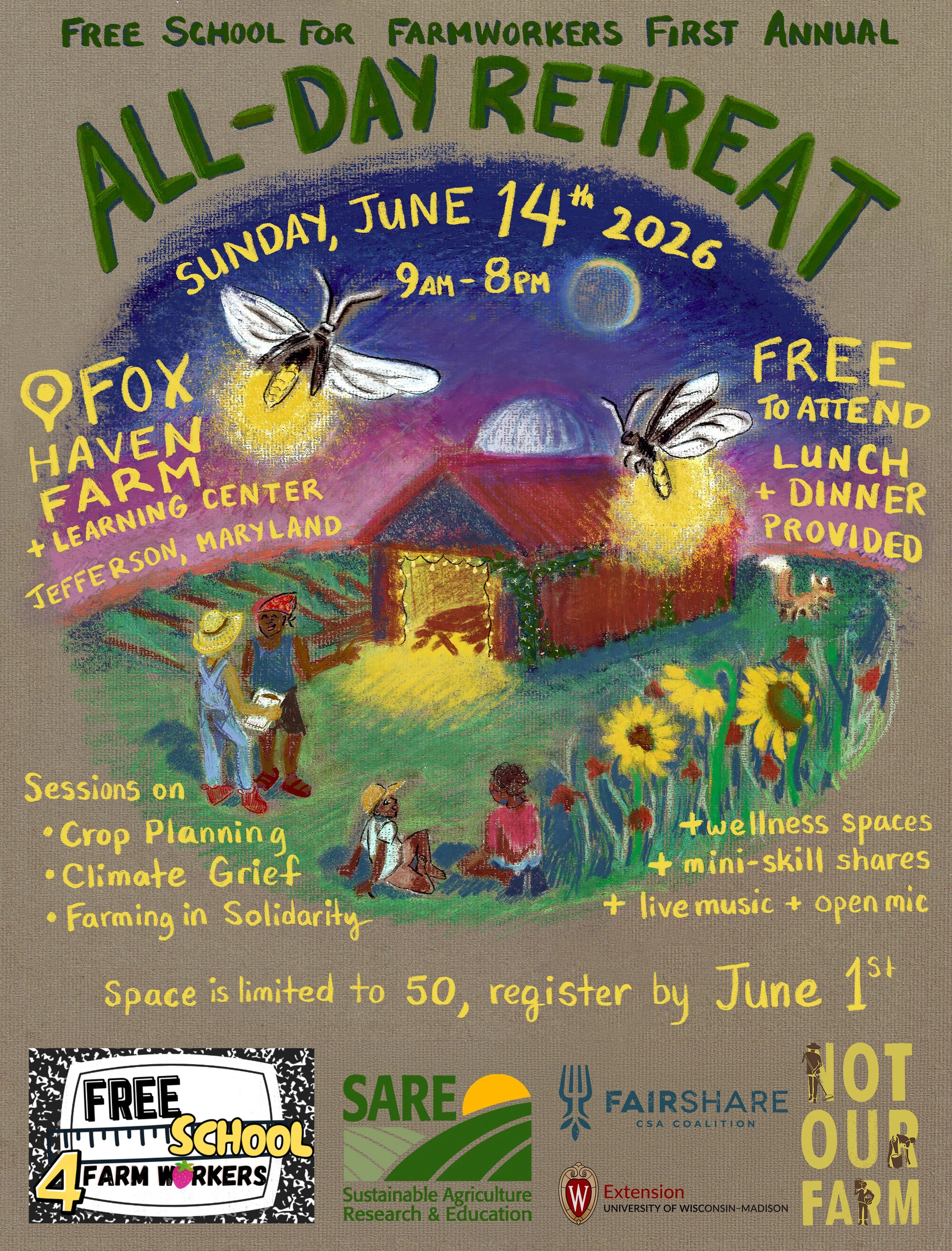
Free School for Farmworkers | IN-PERSON RETREAT | June 14 at Foxhaven Farm
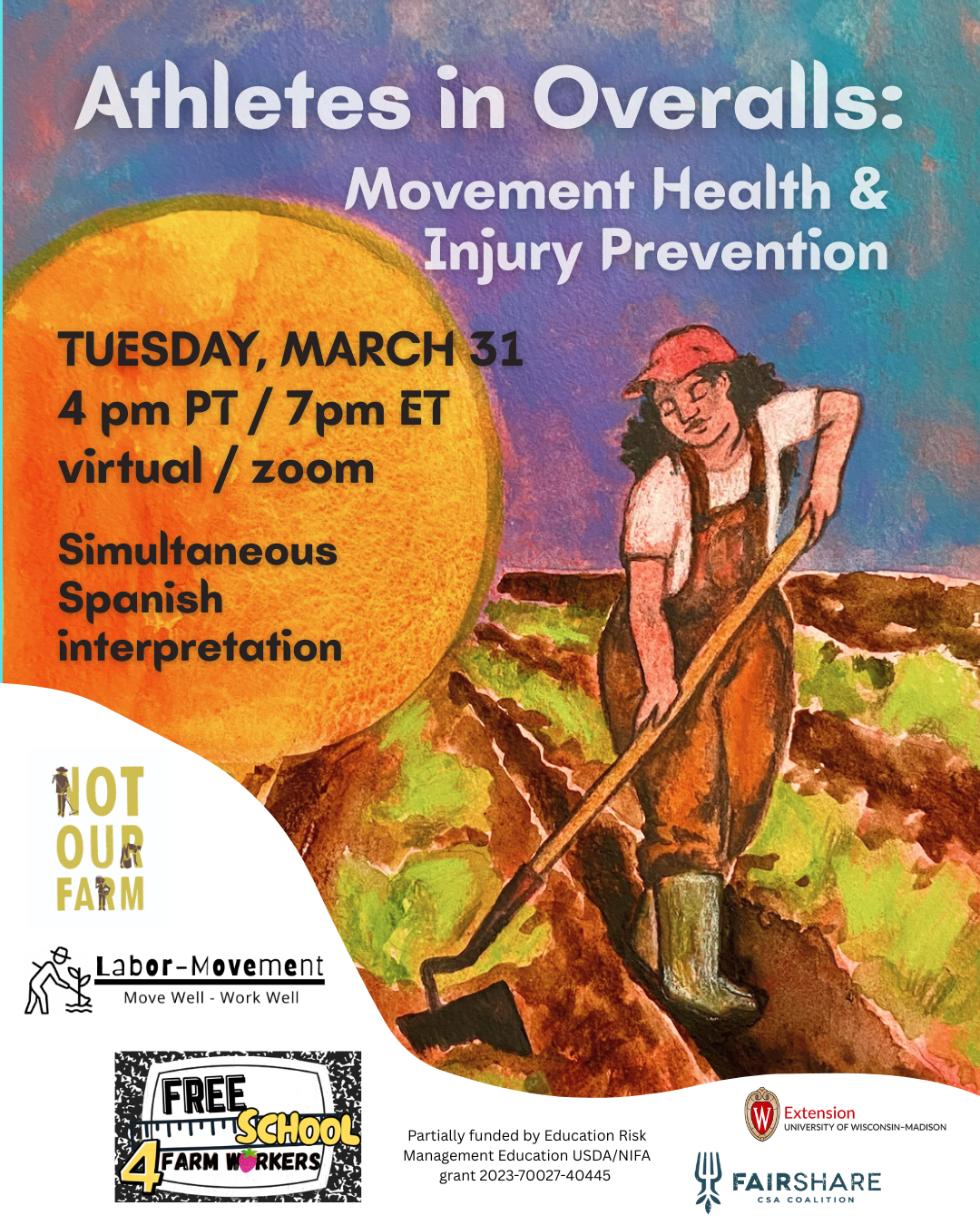
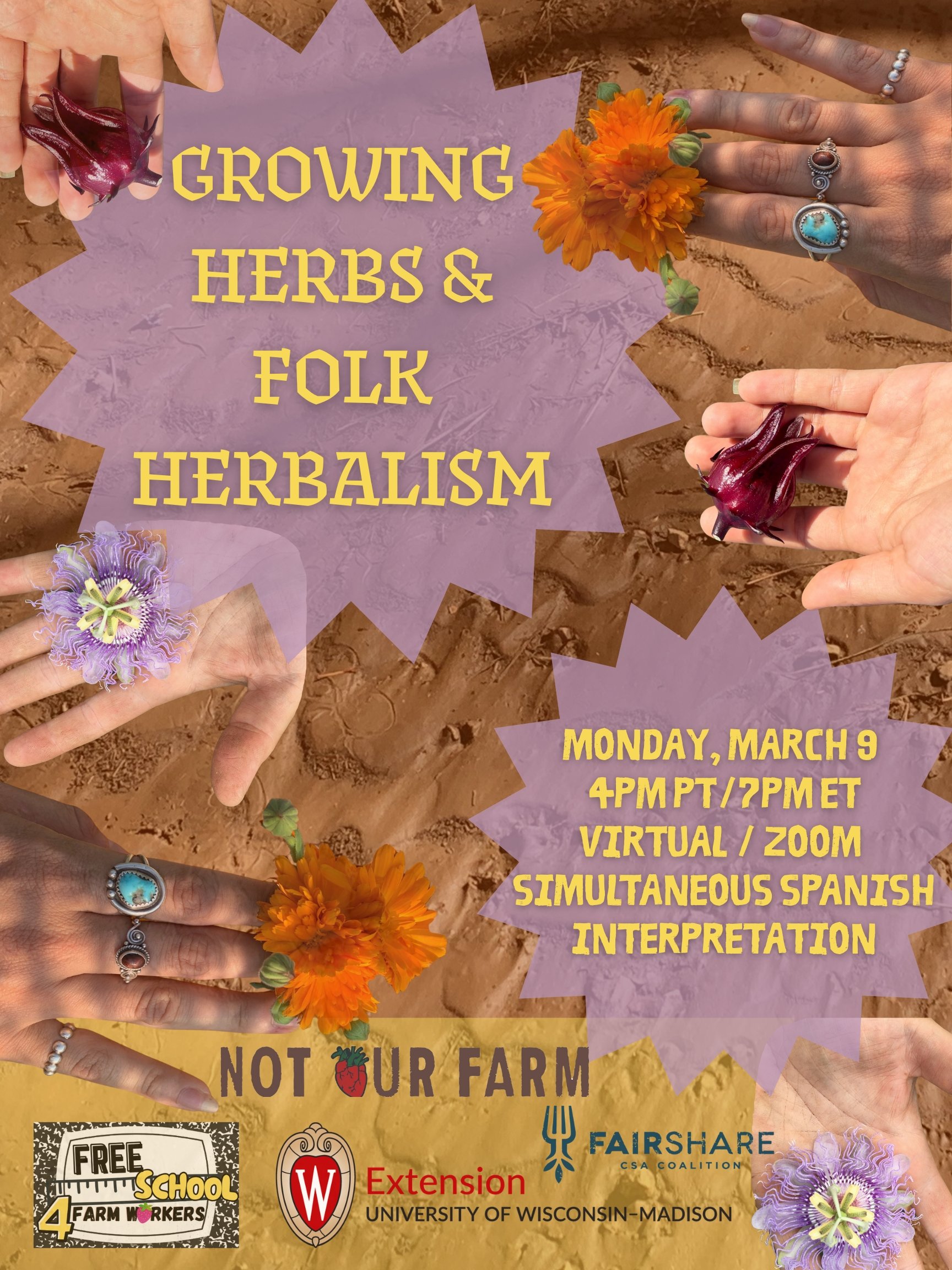
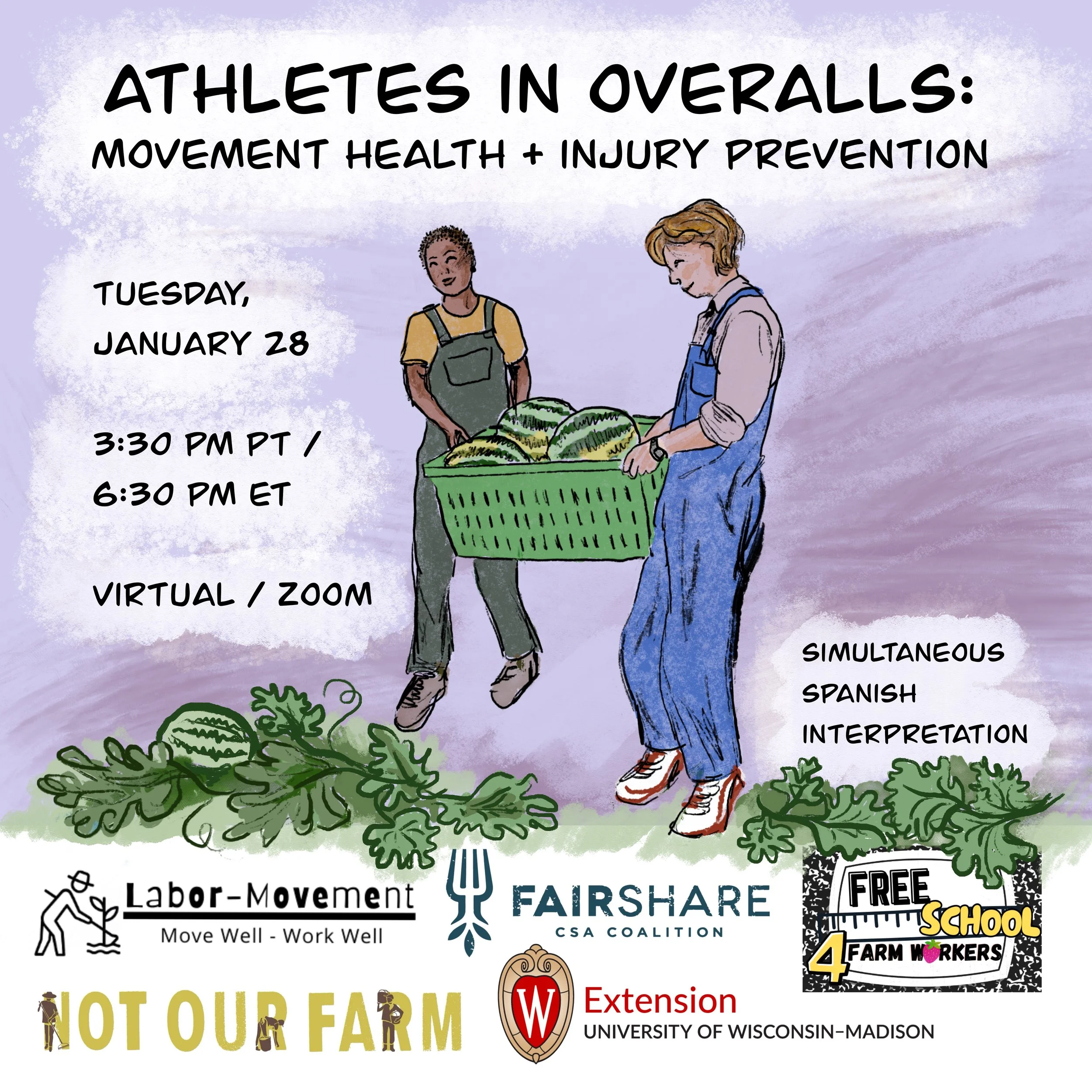
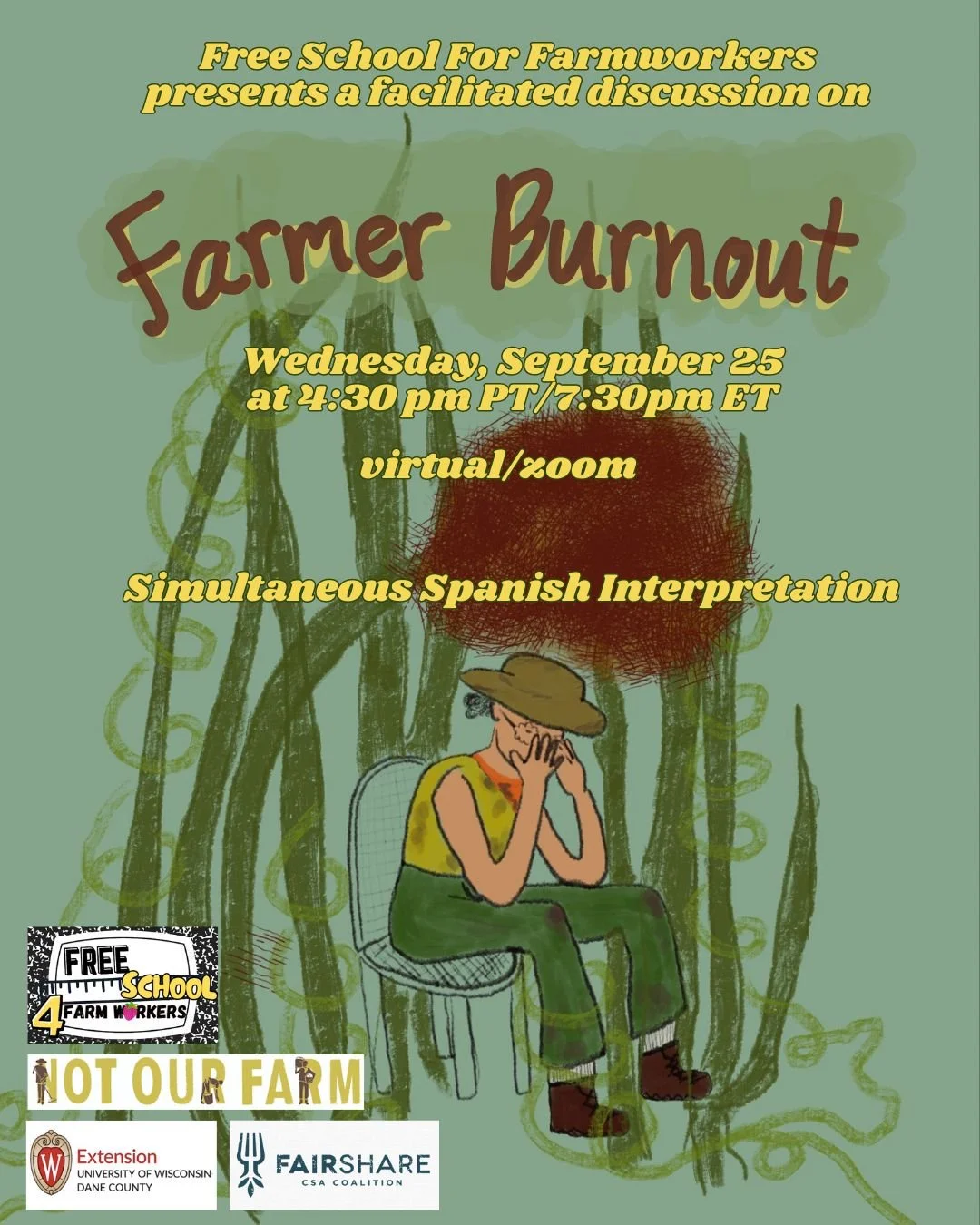
Free School for Farmworkers is a farmworker-led virtual teach-in series co-organized by Not Our Farm, UW-Extension, and FairShare CSA Coalition. Free School centers the lived experiences of farmworkers and our collective skills and knowledge. Since 2023, over 2,000 farmworkers from across the country have participated in Free School sessions!
This summer, we’re taking Free School on the road!
Please join us for our first ever (and hopefully first annual) Free School for Farmworkers IN-PERSON retreat! A week before the summer solstice on Sunday, June 14, 2026 from 9am - 8pm, we will gather at Fox Haven Organic Farm and Learning Center in Jefferson, Maryland, for a full day of celebration, community building, skill sharing, delicious food and nourishment, and so much more!
This all-day retreat will include 3 workshops led by treasured farmers and land-based practitioners, including: Crop Planning with Gail Taylor of Three Part Harmony Farm, Climate Grief with death and grief doula, mai cortez doan, and a Farmworker Solidarity Panel.
The day will be bursting at the seams with opportunities for attendees to lead mini-skillshares on topics of their choosing, participate in zine and farm gear exchanges, screen print, feast on delicious locally sourced and prepared food, take part in wellness activities, tour our host farm, sit by a bonfire and close out with a live music and an open mic! All activities are opt-in, and there will be continuous opportunities to be quiet, reflect and have alone time, too.
Come with your farm crew and leave with new friends!
Space is limited to 50, so please only register if you are sure you can attend, or let us know if your plans change so we can bring someone in from the waitlist!
The Free School retreat is free to attend. Lunch and dinner will be provided.
Access information: If requested by registrants, all 3 workshop sessions can be simultaneously interpreted into Spanish and ASL (American Sign Language).
Sessions will be held in well ventilated, breezy spaces. N95 masks will be available.
We will also have a low-stim quiet zone that can be accessed at any time throughout the day.
Travel stipends: We have limited funds to support travel stipends on a first come, first served basis for people traveling at least 50 miles roundtrip. We are still actively fundraising for these stipends but can provide at least 30 stipends of $50 each to support travel to the retreat.
Please see additional details in the registration form.
Date and Location: Sunday, June 14, 2026 from 9am - 8pm ET. There is no overnight lodging or camping available. All guests must leave the farm when the retreat ends.
Fox Haven Organic Farm and Learning Center, 3630 Poffenberger Rd, Jefferson, MD 21755
Eligibility to attend: Free School for Farmworkers is for farmworkers/landworkers and those who work with or support farmworkers. This is not a space for traditional farm owners and operators with employees.
Free School for Farmworkers strives to create pockets of opportunity to skill share, connect and learn about parts of agriculture that can be overlooked, forgotten or hoarded due to the nature of working on farms under capitalism.
Organized by: Anita Adalja of Not Our Farm, Tolu Igun of OlaLekan Farm and Not Our Farm, and Sarah Janes Ugoretz of University of Wisconsin-Extension and FairShare CSA Coalition
Flyer designed by Alicia Robinson-Welsh
NEWS

Good Food Jobs • It’s Not Broken by Anita Adalja
Good Food Jobs • Dear Farm Owner / Boss… by Mallika Singh
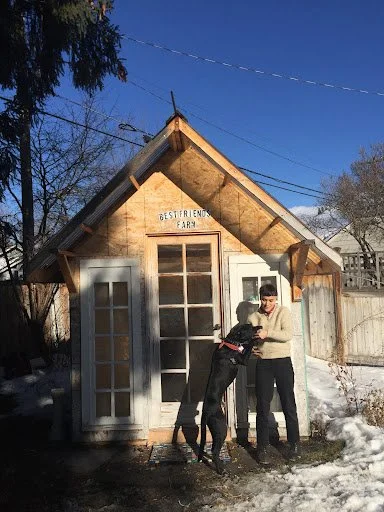
Good Food Jobs • Not a Team Player by Danni Simonik
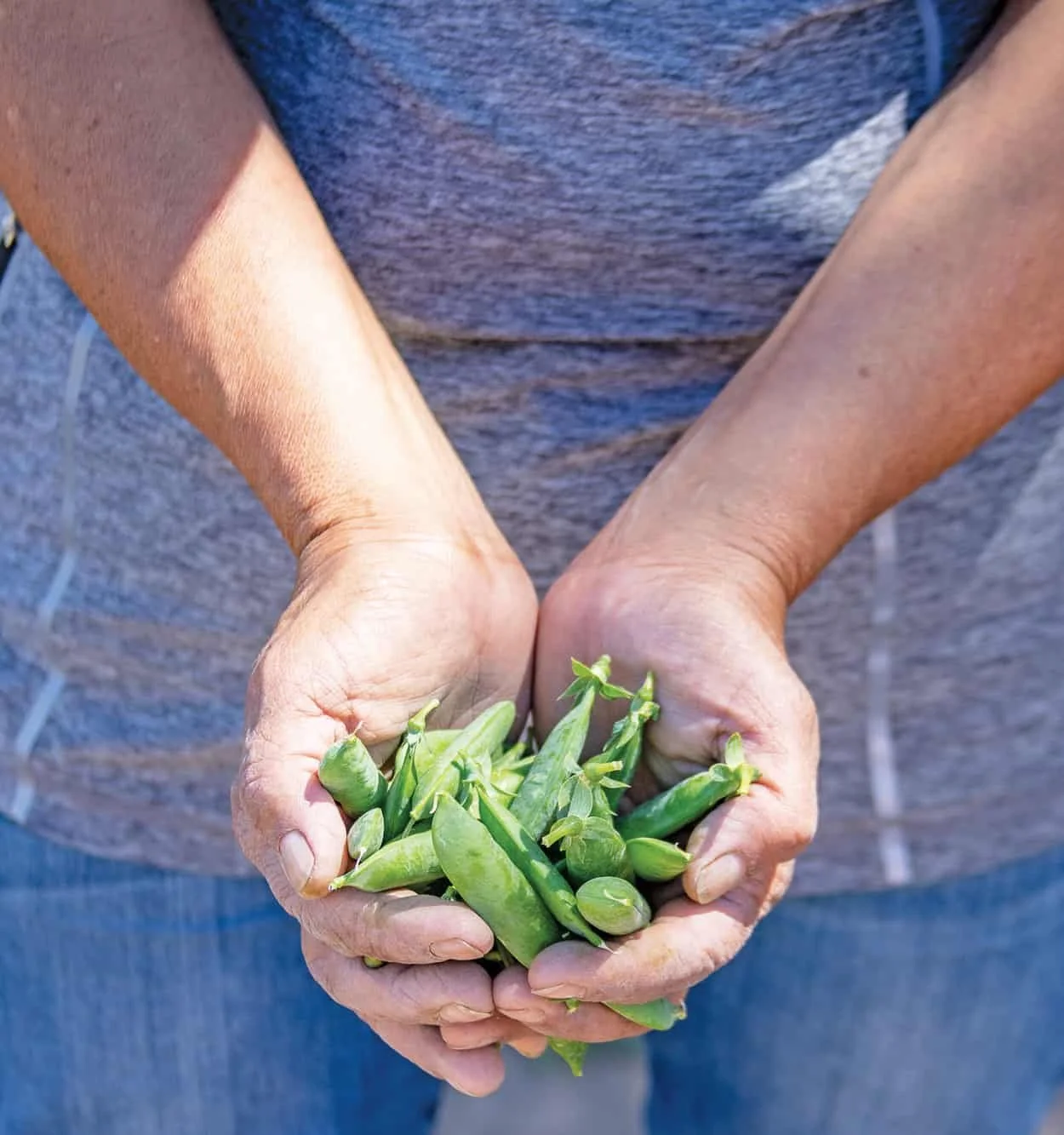
Edible New Mexico • Farmworker Health Here at Home by Anita Adalja

The Food Safety Dish Podcast • Community Care is Good Food Safety with Anita Adalja

Civil Eats • Queer, BIPOC Farmers are Working for a More Inclusive and Just Farming Culture
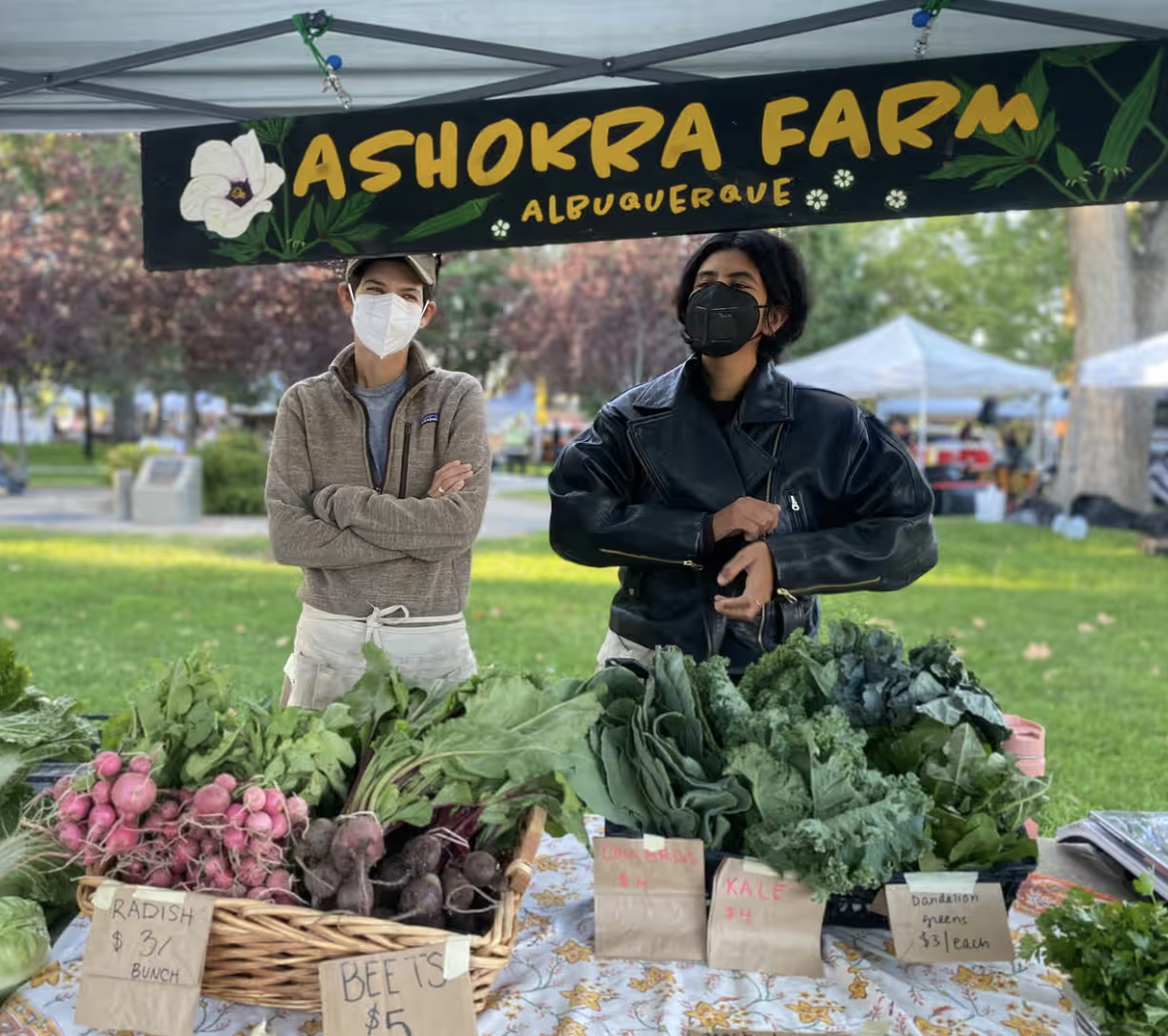
The Guardian • Radishes and Rainbows: the LGBTQ growers reimagining the traditional family farm

Ambrook Research • Are Farm Apprentices and Interns Getting Paid What They Deserve?

Growing for Market • Extreme heat on the farm: Exploring OSHA’s proposed heat rule
PAST EVENT FLYERS