Anonymous
This interview was conducted by Mallika Singh.
Do you want to start by telling me a little bit about yourself? How and when did you start farming?
I started farming about three years ago, I started through a WWOOF program, after that I worked a season on a farm. Then I began another season working on a farm which was cut short for a number of reasons.
I got into this work because I see it as one of the most important things. I studied environmental justice in school, and found myself more and more drawn specifically to food, and the ways that food security is in such danger, as well as the conditions that workers are experiencing. Those were two strong motivating factors. My ultimate goal is to have a food forest that provides free food and ideally housing for people. Pretty lofty goal for someone with no money, who’s just hoping for a rich donor to land in my lap or something.
There are definitely benefactors out there! Have you ever visited any food forests?
Yes, the place I was at for the past two weeks was like that. I tried to document all of the plants that they had, and after 70, I was like, I can’t, I need to come back.
Cool. Do you want to share a little bit about your most recent experience working on a farm, which you said got cut short?
Where do I start! I was hired as a manager, with pretty minimal experience. I’ve volunteered for the past six years at my local community garden. I was really surprised at the opportunity and really jumped on it. I realized within the first couple days that it was not what I thought it would be. My boss framed it as this community driven space that cares about biodiversity and pollinators, when the reality was so far from that. Not only did she not care about her own workers, it was also really clear she didn’t care about the land itself. She had never worked a single day on a farm. She was gifted this land.
Most of it had perennials already growing on it, even those, she would harvest back far too much. There was lily of the valley that she harvested about 80% of the season, while multiple people were telling her that;s not the right thing to do ecologically, but she didn’t care. There was also a Hispanic man who works on the property, who had been working there prior to this person starting the farm. The way she would refer to him was as “one of the workers”, but he should have been farm manager. She knew next to nothing about growing. She would ask him advice for everything, ask him questions for every little thing. She had no understanding whatsoever around how anything grew.
She put a lot of pressure on the workers, while saying that she views herself as the farm manager, yet was only there one or two days a week. She would snap at me consistently for no reason whatsoever. This is just one instance of many that built up, but one day there was five minutes left of work, and she had asked, can you help me with this because she had just gotten to the farm thirty minutes prior, as everyone else was about to leave. I started saying yes, but… and before I even finished my sentence she snaps and goes: a simple yes or no would do. That was the energy she was bringing anytime I talked to her. She had no respect for anything or anyone. She came from a lot of money. I believe there were four empty homes on the property.
And then one day my coworker pulled me aside, and essentially said, the way she’s been treating you isn’t right. I immediately broke down and started crying. The next day, I tried to just get my job done, she wasn’t there, as she typically wasn’t. At the end of the day, on an order day too, so a pretty important day on the farm, she called me after the whole day of work to fire me. I told her that this call was indicative of the disrespect I had been shown the whole time I was working there. She had nothing to say, she had no reason to fire me. The only feedback I had gotten from her was that we were consistently ahead of schedule, she had never sat me down to have a conversation. My guess is she just didn’t like me, and didn’t like that I am different from her in so many ways. I feel relieved to no longer be working there, but still confused about the situation.
Wow, I’m so sorry. That really sucks and is confusing. It sounds like she didn’t have the skills to run a farm or have employees, but also that she was treating you particularly badly? How was her interaction with the rest of the crew?
Yes, maybe because I was the only person who had an official manager title, she was putting a lot more pressure on me. There were three guys who she referred to as the crew. She showed them very minimal respect. They all spoke Spanish and her attitude was sort of, just don’t even bother communicating with them. But then there was 4-5 “harvest crew” who were rich ladies that wanted to cosplay as farmers. And they got all the respect in the world. They all pulled up in their porsches, moved super slow, did barely anything, and never heard a word about it. But that was one of the people who pulled me aside to say that she noticed how the owner was treating me. Because there was an occasion where I was pulled into the cooler to be screamed at, I think so other people couldn’t hear, and it was literally about nothing, just her freaking out about the busy day.
That’s super messed up and inappropriate.
I really just wanted to share this story. I feel like it needs to be shared.
I like to use the term land steward, because I think that speaks more to my ultimate goals. Not just to grow food for people to eat, but also to increase biodiversity, to care for native species and plants, native pollinators, all of the things that are so crucial to our ability to keep growing food. Care for the soil…I think just the term land worker or farmer doesn't encapsulate all those things, and land steward speaks more to the holistic nature and approach I like to take. The understanding that we have of “farmer”, is as an owner.
What was she trying to grow and where was the food going?
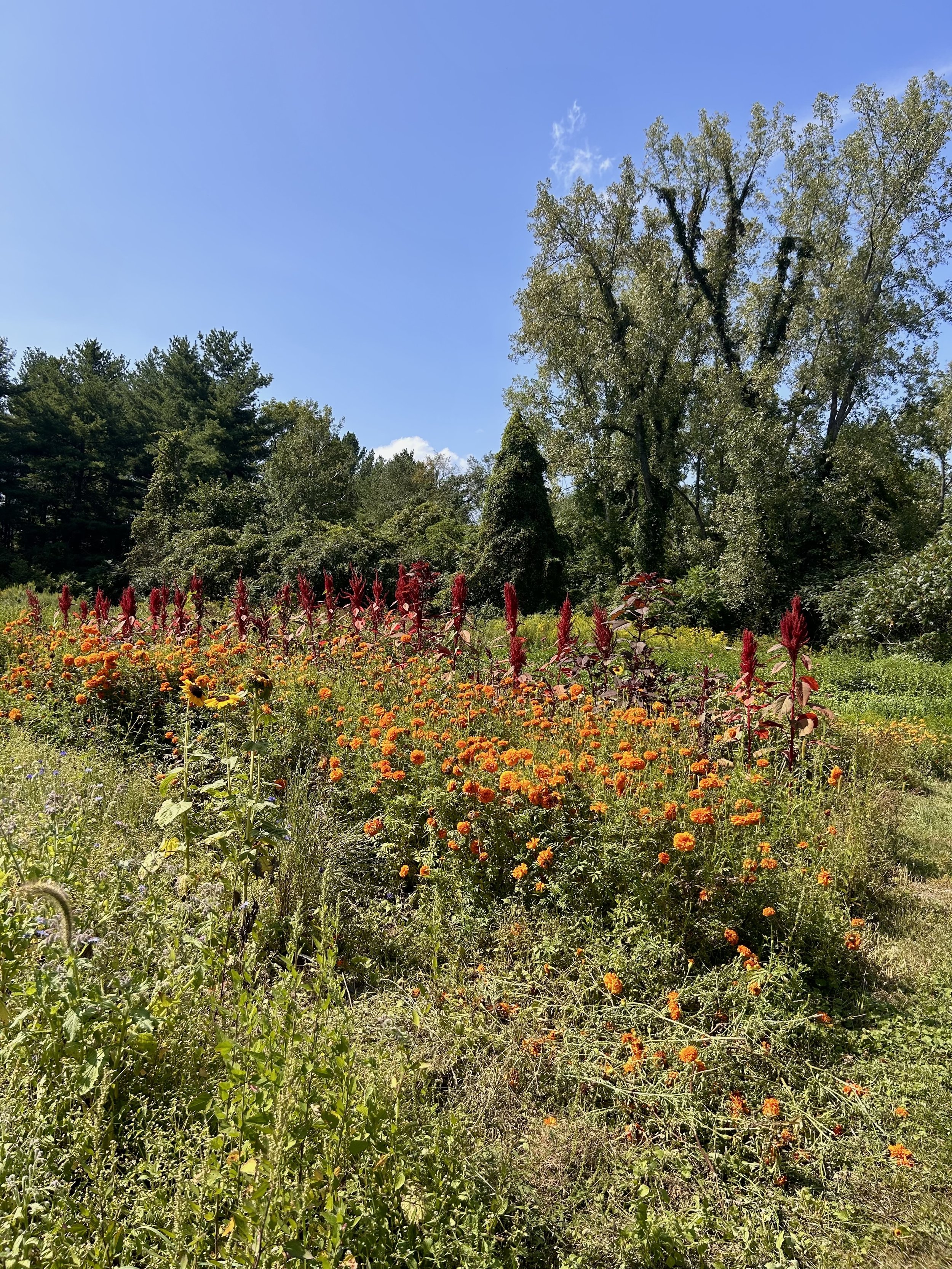
It was mostly flowers, but there was also a bit of food. She would use the food for flower arrangements, we were never allowed to take any. It felt like it was almost a power play. She knows that half of us are on SNAP / EBT. The property is huge, about 100 acres. The lily of the valley, for example, was already growing on the land. She’s profiting off the land and ecosystem without doing the work to take care of it.
How did you find the job? I know some of them may be common or obvious reasons, but what have been some of the reasons you’ve chosen to farm for someone else?
Yeah, I found the job through an Instagram post. One of the reasons I worked for someone else was just not having access to capital or land. But a big reason I picked this job specifically is because it was year round and salary, which as we know, in the farming world, is beyond rare. To know that I would have income year round was a really big deal for me. Flowers aren’t necessarily something I want to be farming, I’m much more interested in food and community access. It felt like a good foothold into that still.
Your situation with this farm, though it’s not the same, reminds me of a farmworker conversation I hosted with people who work on estate farms and benefactor farms. A lot of the farmworkers and farm managers at those spots stay on because the jobs are salaried and year round, but they also have to deal with really particular and insidious behavior.
Yes! What made this particularly insidious — which is such a great word for it — is that she presented herself as so welcoming and caring, emphasizing how much she cares about pollinators in our job interview. I felt like I got the rug pulled out from under me on the second day. She was a wildly different person from the one who hired me.
It sounds like there was also an intentional separation between the different types of people working there.
Yeah, I think everyone was kept separate on purpose. There was very little conversation between people. It was usually a pretty somber place, especially on the days she was there, because it always felt like there was this immense pressure. On top of the way she treated people and not knowing how to run a farm, she also wouldn’t give people our inventory, would just guesstimate, so every day became a crunch at the end of the day. It didn’t lend to being able to chat very often.
It was a very high pressure environment.
The person who had my job previously, told me that she had anxiety every night before work, and would also frequently have panic attacks the day before work.
What was the farm you worked on before this one like?
Incredible. I actually visited them recently. It’s run by two queer people who really care so deeply about the work they’re doing, but also about their employees. At the start of the season, they transparently gave us all of the financials, including what they pay us, what they pay themselves, what they pay in operations costs. I think it makes it so much easier to feel okay with getting paid little when you see that they’re getting paid next to nothing and doing far more work.
It helps so much on a farm to know how much things cost and see how things are really working. And it gives knowledge and skill to people who are interested in starting something, like the way you’re interested in starting a food forest.
100 percent. It was a really helpful thing to share with everyone. They also paid for an ergonomics training for us at the start of the season. It was really really helpful and something I’m going to carry for the rest of time farming.
Also, they were constantly so open to feedback, if they needed help with some organizational system, they would ask us what would work best for us. It was clear that it wasn’t from this production and efficiency standpoint, but that they cared about our health, wellbeing, safety, mental health – knowing how hard farming is, and wanting to make things as easy as possible on our end. Gave us so much food. Introduced a system the year I started working, where at the farmer’s market we were able to barter anything that we grew for other items. Essentially using their money as our own. They went far above and beyond to care for their workers.
Amazing. That sounds like such an opposite experience to your most recent one. Well, related to this, what are some of the qualities of a farm you would like to work on? What is your dream situation?
I believe all farms should run cooperatively. I want to farm under a cooperative structure where the farm is owned by workers. On my ideal farm, there would be so much transparency around how the farm began, why it’s operating the way it currently is, financial transparency, even transparency why we would sell to certain people and in certain ways.
Kind of being brought into the whole process and decision making?
Yeah. Especially since folks who work on farms are quite literally putting our bodies on the line. And I think the least that we could have is the reasons why. And to be able to say, I want this, or we want this, and have that be received.
Some of our questions are about nomenclature. Do you call yourself a farmer, farmworker? Do you see a difference between those things? Are there other terms you like to use? Land steward is one example.
That’s what I was going to say! The term farmworker, to me, can almost feel degrading at points. The way I think about it is like…I’m the farmer, I will tell you what to do, you’re the farmworker, you will obey. Aside from that though, the reason I like to use the term land steward, is because that’s what I really see myself as, and I think that speaks more to my ultimate goals. Not just to grow food for people to eat, but also to increase biodiversity, to care for native species and plants, native pollinators, all of the things that are so crucial to our ability to keep growing food. Care for the soil…I think just the term land worker or farmer doesn't encapsulate all those things, and land steward speaks more to the holistic nature and approach I like to take. The understanding that we have of “farmer”, is as an owner.
I also like land stewardship as a framework that doesn’t have to connote ownership. Is there any kind of support you feel would be helpful for people working on farms owned by others? Perhaps even specific to your most recent experience, are there things that would have been supportive for you while you were working there?
To be honest, I’m not sure if there’s much that could have made the situation better. I had asked her multiple times if we could have a conversation but she didn’t take me up on it once.
More broadly speaking though, I think some kind of fund so that farmers can be paid in the off season would be so important. The way I see that, I guess, could be some kind of government assistance that doesn’t have to be too difficult or bureaucratic, like going to the unemployment office again and again. Some kind of recognition of seasonal farmworkers and providing wages during the off season.
That’s so real, and I hear that from a lot of people. This is not necessarily a systematic solution, but I have heard of some cool models. I can’t remember the name but there’s one farm I’ve heard of where the crew does farm mechanics and building work in the off season.
Okay, is there anything else that you’d like to share about your relationship to farming or anything we haven’t touched on? What are your plans for the rest of the year?
Something general I wanna share about farming is that there’s a strong need for more young people to be doing this kind of work. The way we rope more people in, is to make the work more accessible, to have it make more sense financially.
For the rest of the year, I’m gonna be WWOOF’ing at a handful of farms and doing a few catering gigs to make money. I’m already having a few conversations with farms about next season, so that I land at a place that I really like and enjoy.
I trust that will happen for you!
Thank you!